
In the last blog, we dived into knowing your ideal client and defining them in a clear way. (Check it out here). This was about being clear on who you want to work with and don’t before you go on the search to find them.
As you move through the journey of finding your ideal client, there is ONE big question that will help you attract and find them quicker:
What problem do I solve?
Everyone in this world is driven by pain or pleasure. And it is important for you to know, what drives you? What drives your customers? And how can you tap into both the pain and pleasure points!
If you want to join me live for a 25-minute mini masterclass on How to Define the problem you solve – Click this link!
Let’s explore:
- How to define the problem you solve?
- How to talk about the problem you solve?
- When to tap into Pain vs Pleasure points
- How I can help you further!
If you have been reading my blog for a while, you will know how passionate I am about helping small businesses make money with ease. This is where I move from in everything I share. And during this 6 blog series, I am covering the 6 C’s of business strategy (this is blog 2 of 6). Because honestly, these 6 C’s strategies have made my clients and my own business easier, more fun, and more profitable.
How to define the problem you solve?
You know I love a journal question, and honestly, this is the best way to define the problem. You need to have your ideal client in mind. Have a really clear idea of who you want to support and work with. And then you can start diving in and asking some questions that will help you nail down HOW you can help them.
These are some example questions you could ask:
- What is my ideal client stuck with?
- If they had a magic wand what 3 wishes would they make?
- What would help them get transformation in their life or business?
- What are they struggling to understand or action?
- How can my experience and expertise help my ideal client?
- What is their biggest desire or goal they would love to achieve?
Each of these questions will bring you closer to understanding your ideal client. They will help you tap into what they are thinking, dreaming of and worried about. And this is how you connect to their problem. This is how you figure out what you can help them with and what they will buy from you.
How to talk about the problem you solve?
Ideally as you define the problems your ideal client have, you can relate them back to what you do. You are aiming to end up with a sentence or two about what your ideal client needs. Check out this example from my business:
My customers struggle with creating a business that truly supports their life, they feel overwhelmed with comparing themselves to others and don’t know if they plan for their business will ever work, but they are passionate and hungry to take the action to make it happen. If they had 3 wishes they would wish for someone to look after their social media, more clients in their business, and more confidence to share their ideas.
Once you have identified these areas you can then start to think about how you talk about them. This is so that ideal clients know what you do, how you can help them and why they should pick you!
One of my favourite ways to do this is to break the ideas into categories of content ideas. So you will come up with 4-6 topics that would appeal to your ideal clients. And show you as an expert in what you do.
In my business I have these categories:
- Balance – getting a business that supports you
- Automation – reducing overwhelm and taking control
- Mindset – Remove comparison and step into your power
- Strategy – the actual plan
- Funnels – a method of automation
- Life – living to the fullest, giving yourself permission
You can then relate their problems to these areas, and jot down some solutions you can start to share. This will position you as an expert in your industry. Sometimes content can cross over a few different categories, like if you take this 6 C’s strategy series that covers all my core categories that would appeal to my ideal client.
How to use your categories
This is a question I get all the time and honestly, there is no hard and fast answer, but I wanted to give you a few ideas or suggestions to play around with and test.
You could talk about 1 category a week. Creating 3-5 posts on one topic and then every 4 – 6 weeks you touchback on the same topic. This is a good way when you first begin to educate your audience at a deeper level.
Or you could go through your categories on a post-by-post basis. So you decide you will post 3 – 5 times a week, and each time you post you move onto a new category and talk about the area.
You could go with whatever floats your boat on the day! But just keep a broad eye on the overall topics and make sure they are all getting some air time.
You could create a blog, vlog, or long copy content (pillar content) on each category and then create quotes, graphics, and posts from that.
Honestly, the key here is finding something that feels really easy and good for you. Because that means you will be more likely to continue to do it!
When to tap into Pain vs Pleasure points
A lot of business owners will go wrong by only tapping into one – either pain or pleasure. But everyone is different and will have different motivations, so being able to tap into both is really good.
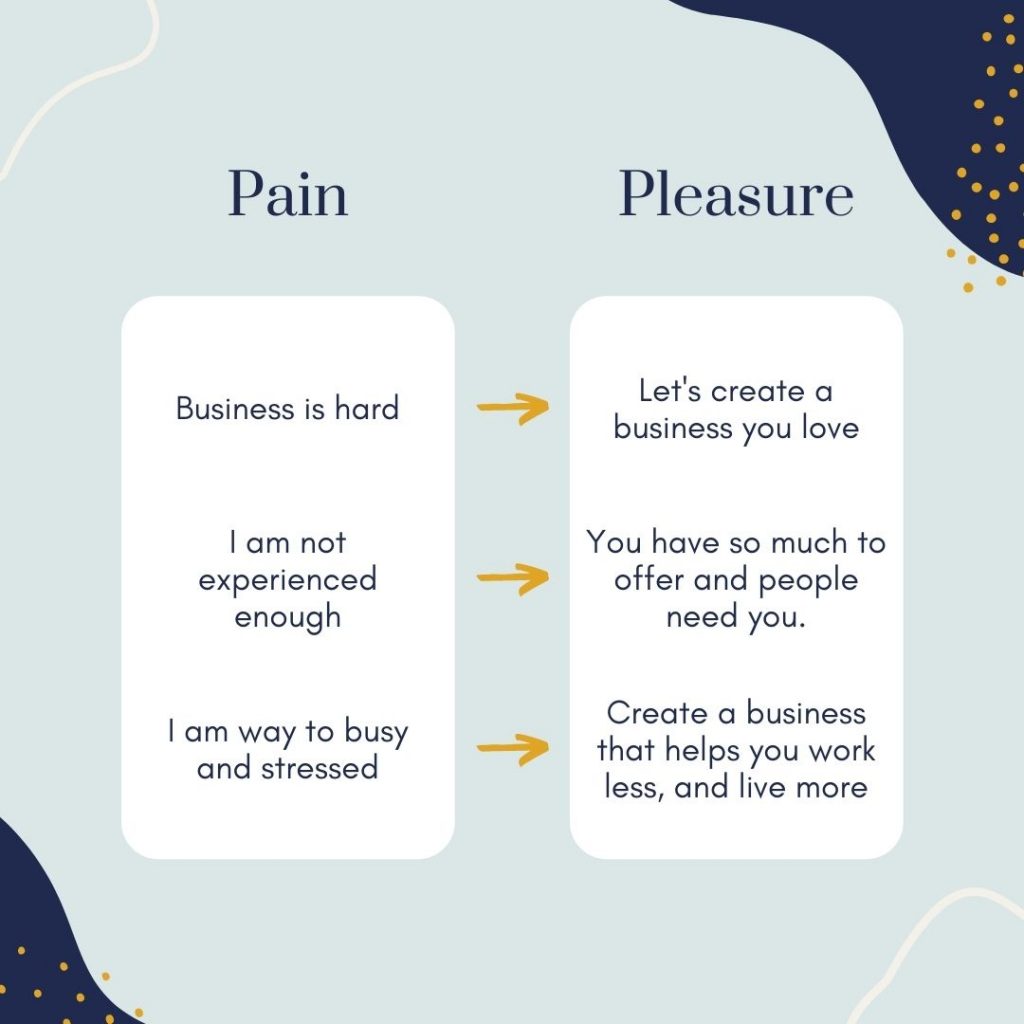
Here is an example of touching on both pain and pleasure points. Each topic you share will have both, so tap into them!
Think about the categories you highlighted before and what would the pain and pleasure points be in each of those areas. This will help you dive a little deeper and get some more content ideas to talk about the problem you solve. And the amazing transformation you get your clients.
As you start to understand your clients more, you will get better and better at tapping into these. But you have to LISTEN! Your ideal clients will ask questions about the areas they struggle with, they might complain or moan, or even make jokes about the pain points. They might share or post about people who are living their dream lives. These are all invaluable for you to make note of!
Using a good combination of pain and pleasure points in your content, sales pages, emails, and communication is advisable. If you focus only a pain you can be seen to be scaremongering clients, and only pleasure can be seen to not understanding the reality of the situation. So make sure you tap into both.
How I can help you further!
Next week I am delivering masterclass 2 in the mini master series. This will cover the topic of defining the problem you solve. So if you want to join me live to learn about this strategy sign up for FREE here! The sessions are 25 minutes, so high impact, fast pace, because I don’t want to waste your time – it is precious after all!
Cant wait to see you live!